Discovery at Malapa site
In August 2008, a fossil clavicle found at the Malapa site in southern Africa led to the discovery of a new species, Australopithecus sediba, described in the journal Science two years later. This site is part of the region known as the cradle of humanity, where many early human ancestors have been found.Lee Berger’s find
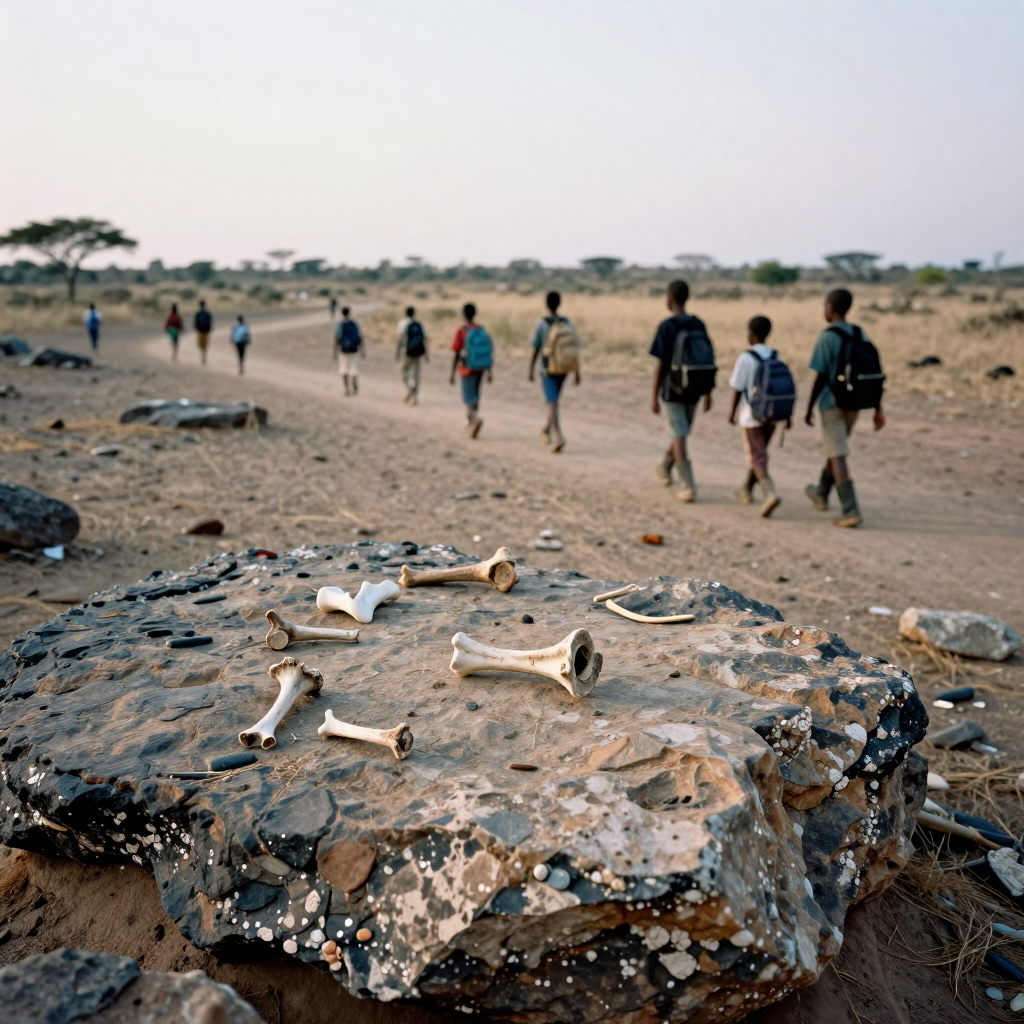
On August 15, 2008, paleontologist Lee Berger was exploring the Malapa site, north of Johannesburg. His son, Matthew, discovered a brown bone sticking out of a rock, which was later identified as a clavicle, a rare find in early hominid fossils.Preserved skeletons
After removing the surrounding rock, the team found an entire skeleton preserved inside. Three weeks later, Berger uncovered a second fossil nearby. Both were nearly two million years old and had been preserved after falling into a chasm and being quickly buried by sediments.Name and characteristics
The name Australopithecus sediba comes from the Sesotho language and means "source." This species had a brain size of about 400 cubic centimeters, much smaller than modern humans, and long arms suggesting it was a strong tree climber. Its pelvis and other features showed a mix of traits between apes and early humans.