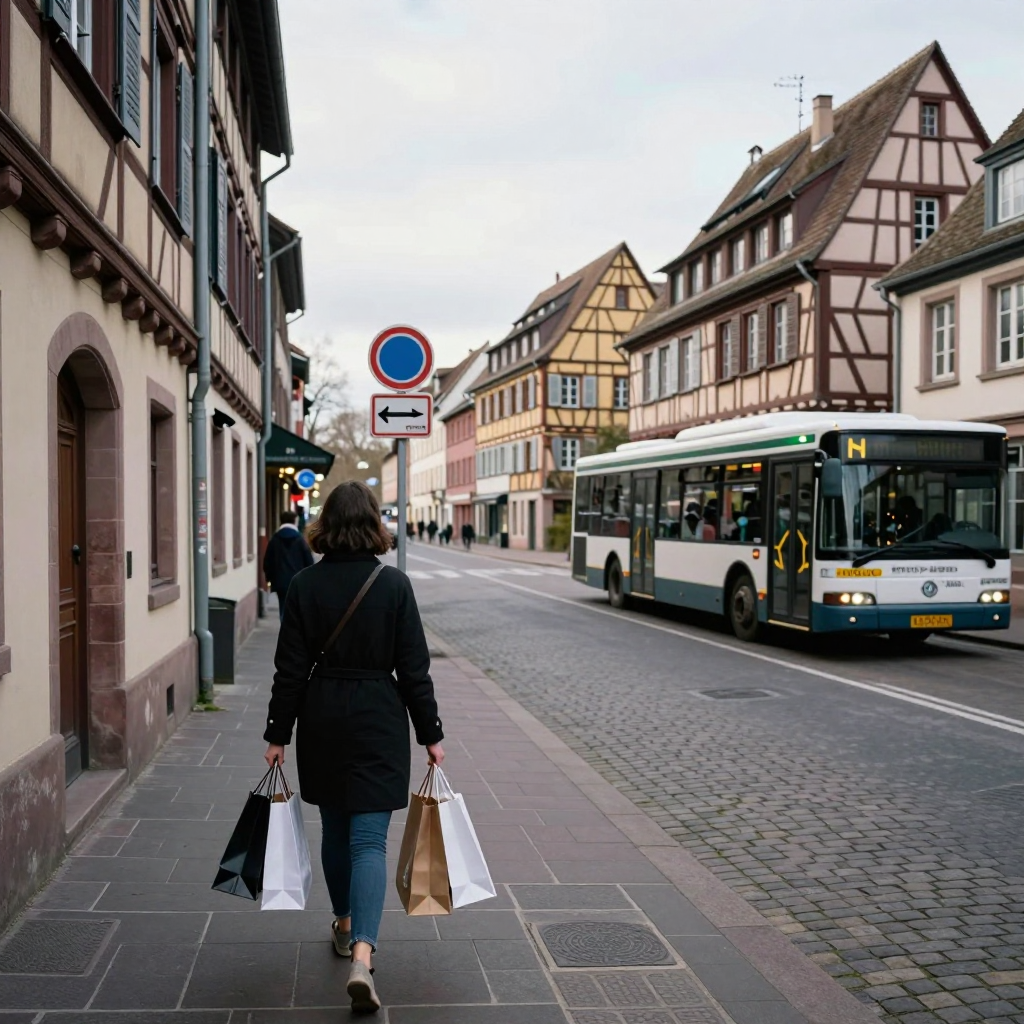
Transport in Strasbourg returns to normal after two days of restricted service, but tensions remain over safety measures and neighborhood perceptions.
Transport resumes in Strasbourg neighborhoods
Transport services in several neighborhoods of Strasbourg have returned to normal after two days of limited operations. The restrictions, which were imposed by the local transport company CTS, were lifted following incidents over the weekend of October 17, including the destruction of a CTS office and an attack on a driver.Neighborhoods impacted by service cuts
The affected areas—Hautepierre, Neuhof, Koenigshoffen, the Poteries, Meinau, the Port du Rhin, the Musau, and Lingolsheim—are described as popular parts of the city. Residents have expressed frustration over the impact of the restrictions on their daily routines, including challenges with commuting for work, study, shopping, or returning home.CTS employees divided on restrictions
The decision to restrict transport has also divided CTS employees, many of whom live in the affected neighborhoods. Some support the decision for safety reasons, while others find it unfair and believe it disproportionately affects local residents. A driver who testified anonymously described the mixed opinions among colleagues at the depot.Cultural space criticizes transport restrictions
The Django Space, a cultural facility in Neuhof, highlighted the historical and architectural link between the facility and the CTS, emphasizing the importance of tram services to the community. The co-director of the Django Space, Benoît Van Kot, expressed relief at the return to normal operations but criticized the decision, stating that no one understood the rationale behind it.Local politician condemns transport measures
Florian Kobryn, an insoumis departmental councilor from Strasbourg, joined a demonstration against the restrictions, drawing parallels to curfews imposed after the death of Nahel in 2023. He described the measures as disproportionate and criticized the idea that a transport company could deprive entire neighborhoods of a public service in the name of safety.Social media fuels neighborhood tensions
On social media, videos of the incidents that led to the restrictions continue to circulate, with some users blaming entire neighborhoods for the actions of a few individuals. This has led to a cycle of blame and justification among residents, who are now forced to defend their neighborhoods against accusations they did not commit.CTS unclear on selection of affected areas
The CTS management has not provided detailed criteria for selecting the affected areas, and both the CTS and the Eurometropolis have not answered questions beyond their official communications. The CTS stated that the restrictions were decided "in order to ensure the safety of its staff and its customers," while the Eurometropolis claims its intervention in favor of the restoration of "equal access to public services."Residents concerned about long-term effects
Residents remain concerned about the long-term effects of the restrictions, with some questioning how long it will take to erase the feeling of being treated as second-class citizens. Despite the resumption of transport services, the impact of the decision continues to linger in the affected neighborhoods.