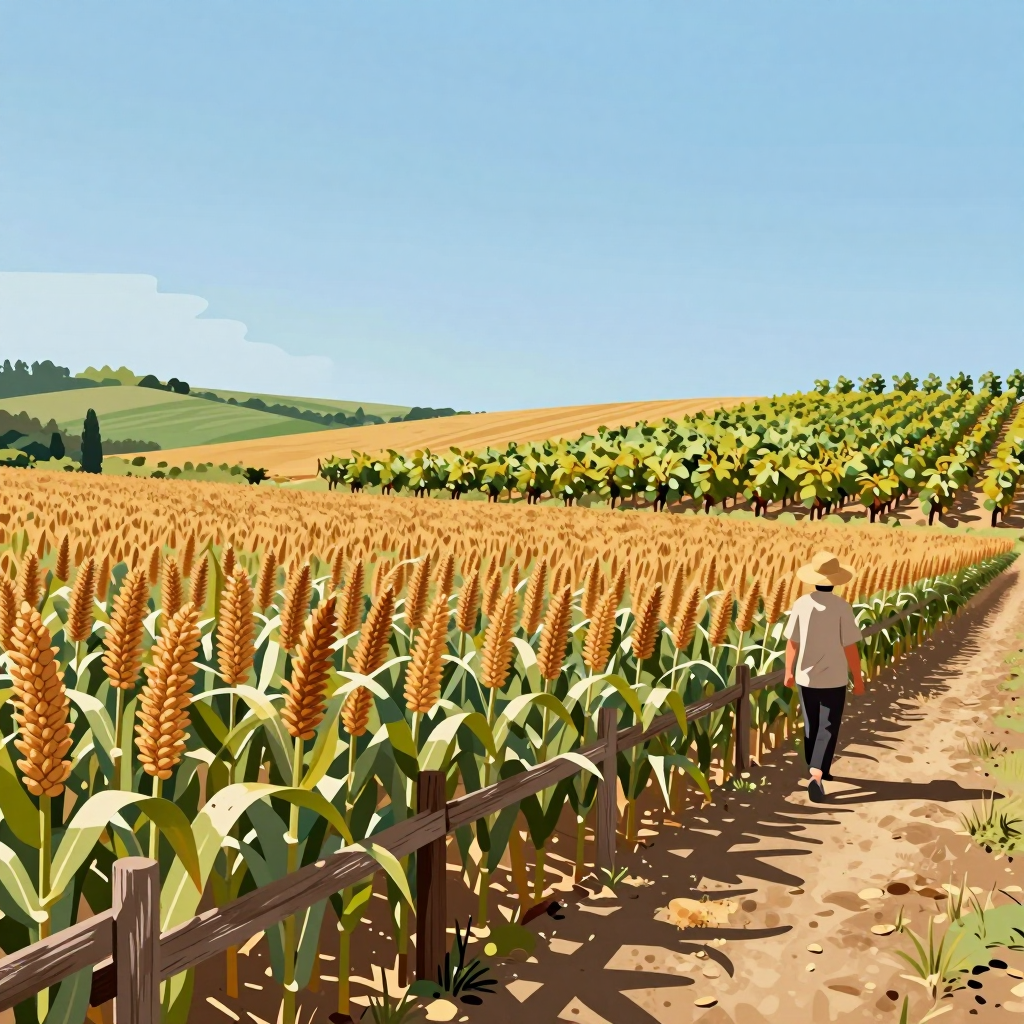
Sorghum emerges as a climate-resilient crop, offering potential to replace corn in Europe amid water scarcity and rising temperatures.
Sorghum shows climate resilience
A study by Inrae and AgroParisTech shows that sorghum can withstand high temperatures and water shortages, making it a potentially climate-resilient crop. This is especially relevant as France's corn production has suffered a significant decline in recent years.French sorghum and corn production
In France, sorghum is grown on 33,307 hectares in 2026, compared to 1,090,649 hectares of grain corn. Corn harvests in France are at a historically low level, with a 26.5% drop in yield from 2025, while sorghum production has seen a smaller decline of 16.8%.Sorghum's global and European presence
Sorghum is primarily grown in arid regions, with 47% of global production in Africa and 17% in the United States. In Europe, it remains marginal, covering only about 0.1% of the continent's agricultural area, despite its potential to thrive under climate change conditions.Projected yield changes
According to the study published in Earth's Future, sorghum yields in Europe could rise in the north and slightly decrease in the south due to climate change. By 2050-2100, average yields could increase to between 3.4 and 3.8 tonnes per hectare, up from 3 tonnes per hectare today.Sorghum as an alternative to corn
The researchers suggest that sorghum could replace nearly 90% of corn used for animal feed in Europe if grown once every three years. Sorghum requires less irrigation than corn, which currently occupies 38% of irrigated farmland in France, potentially freeing up water for other crops and improving food security.