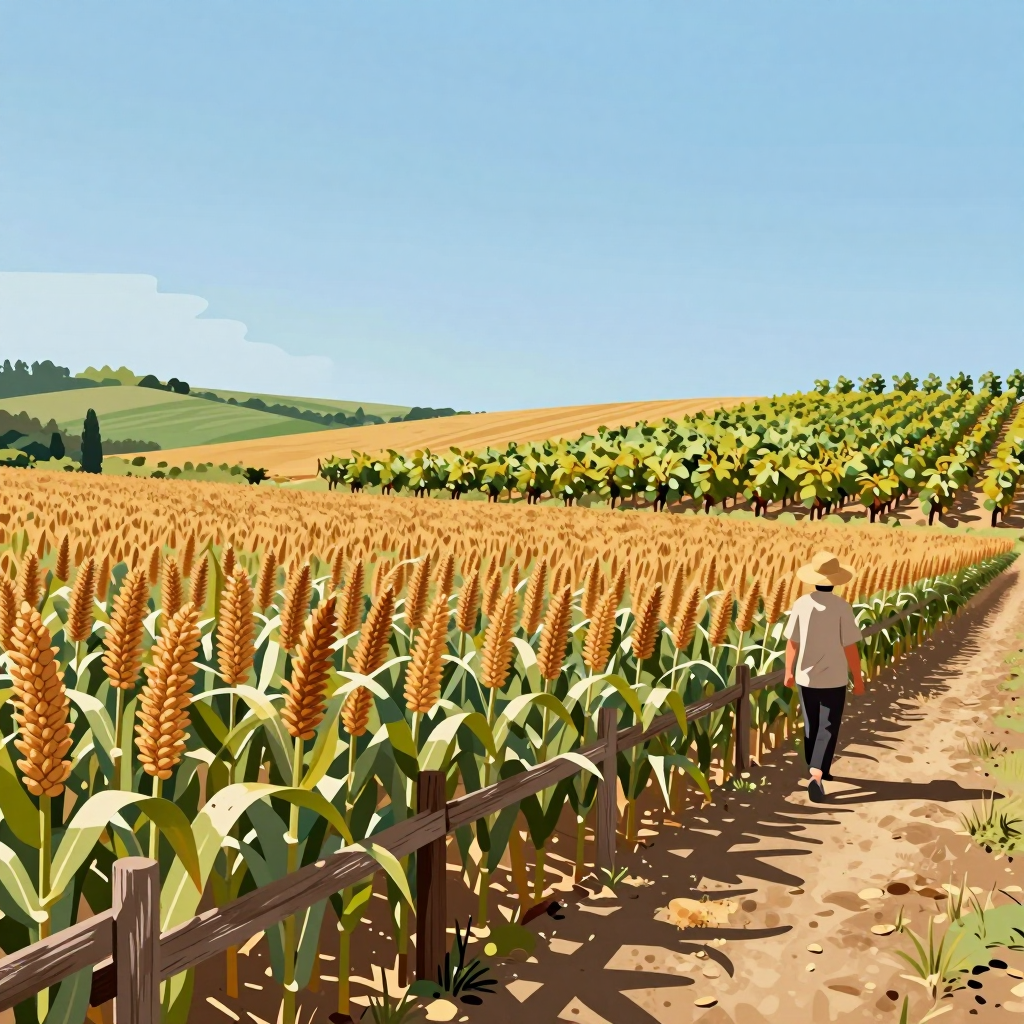
A study by researchers from Inrae and AgroParisTech suggests that sorghum yields in Europe could increase significantly due to climate change. The findings, published in the journal Earth's Future on October 5, indicate that sorghum could replace up to 90 percent of the corn currently used for animal feed by the end of the century. This projection assumes that sorghum is grown once every three years in crop rotations, covering about 33 percent of arable land. The researchers used a model that predicts sorghum yields based on climate data, showing that while Southern Europe may become less suitable for growing sorghum, yields could rise by up to three additional tons per hectare in Northern and Central Europe by the end of the century.
Sorghum is seen as a promising alternative to corn because it is more resilient to high temperatures and drought, according to a press release from Inrae on October 6. The study highlights sorghum as an "interesting option for adapting European agriculture to climate change." However, the crop is currently only grown on about 0.1 percent of European farmland. Researchers warn that expanding sorghum cultivation will require overcoming several challenges, including developing earlier-maturing varieties that can tolerate colder temperatures and adjusting local planting and harvesting schedules to suit the crop's needs.
To support the growth of the sorghum sector in Europe, the study emphasizes the need for coordinated efforts across different regions. This includes improving seed availability, providing advisory services for farmers, and integrating sorghum into the animal feed market. The researchers call for a "European-scale planning" initiative to align policies and markets across the continent. Such an approach would help ensure that the transition to sorghum is both efficient and sustainable, addressing the complex socio-technical and agricultural challenges involved.
The study underscores the potential of sorghum as a climate-resilient crop, but also highlights the need for strategic planning and investment to realize its benefits. While the climate projections are encouraging, the practical implementation of sorghum as a major crop in Europe will depend on overcoming existing barriers and developing the necessary infrastructure and support systems.
Sorghum's Potential to Replace Corn in Europe Amid Climate Change
AI-rewritten from original reportingHow it works

sorghumclimate-changeagricultureanimal-feedcrop-rotationeurope
Original sources:
- 🇫🇷Réussir