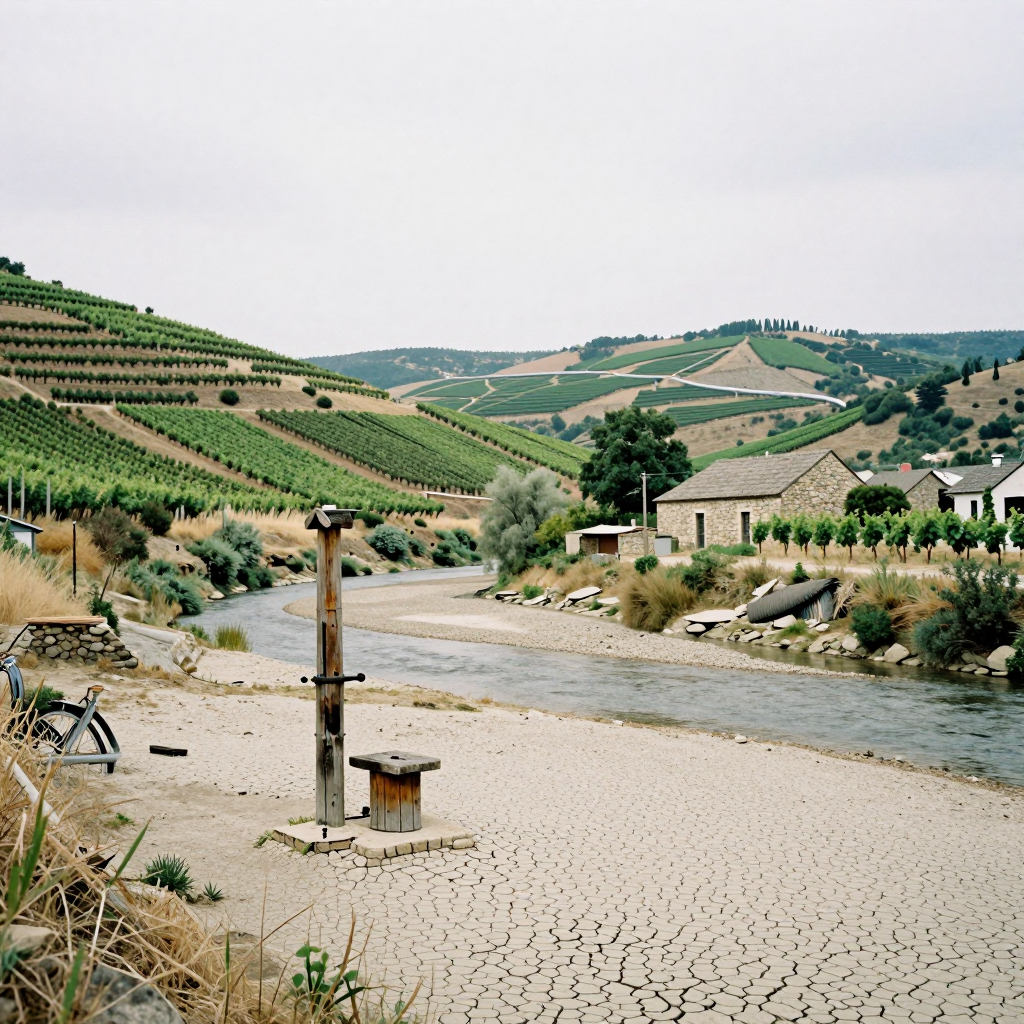
A 200-million-year-old aquifer beneath Vittel is drying up due to heavy industrial extraction, raising concerns over water rights and sustainability.
Vast aquifer under Vosges is depleting
A vast aquifer, formed over 200 million years ago, lies beneath the hills of the Vosges, supplying the town of Vittel. This underground water reserve, known as the Trias Inférieur Grès (GTI), provides drinking water for residents and industrial withdrawals for companies such as Nestlé Waters and the dairy farm l'Ermitage.Aquifer depletion exceeds natural replenishment
According to the Bureau of Geological and Mining Research (BRGM), the annual deficit of the aquifer reaches approximately 1.1 million cubic meters, of which more than 80 percent are attributed to the withdrawals of Nestlé Waters. The dairy farm l'Ermitage is estimated to use approximately 700,000 cubic meters annually for its industrial needs.Residents question water supply reliability
The situation has led residents to seek alternative solutions for their drinking water supply, as the local supply no longer offers sufficient guarantees in terms of quantity and quality. Environmental organizations such as France Nature Environnement and Vosges Nature Environnement have denounced the situation for years, citing the progressive drying of the Vittel aquifer attributed to the considerable volumes extracted by the bottling industry.Legal authorization does not prevent imbalance
The authorization granted to Nestlé Waters has been officially sanctioned by public authorities within the framework of standard administrative procedures regulating the exploitation of mineral waters. However, this formal legality has not prevented the emergence of a glaring imbalance, as the state has effectively created the conditions for a local shortage for the residents.Vittel reflects broader water resource conflict
The case of Vittel is not an isolated incident but a symptom of a broader tension affecting many French and European territories, where the economic valorization of water as a mass consumer product conflicts with its primary function as a vital and shared resource. The situation raises questions about how withdrawal authorizations are granted, monitored, and revised when necessary, and who should have priority over a scarce resource: the daily needs of local populations or the industrial interests of a company with global markets.