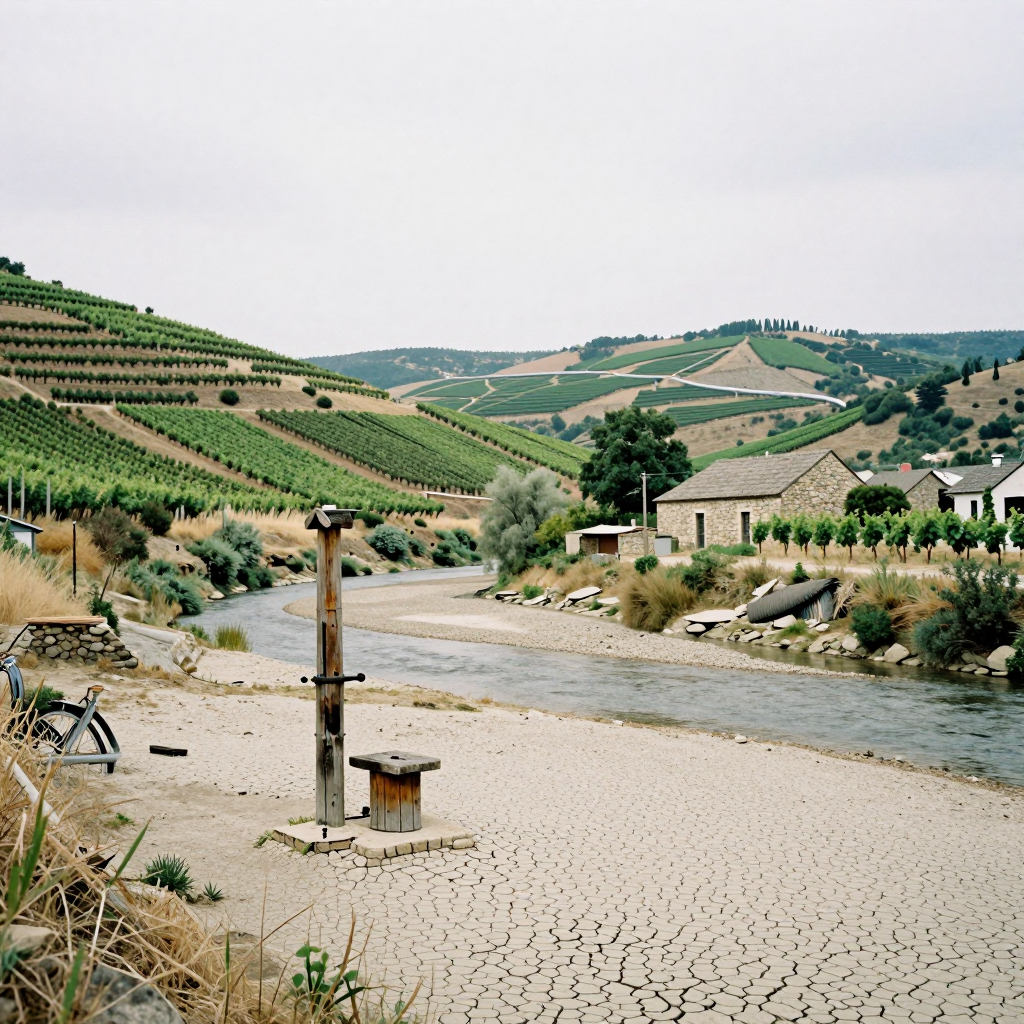
An ancient aquifer under the Vosges is being drained faster than it can be replenished, raising concerns over industrial water use and environmental impact.
Aquifer depletion in the Vosges
The Triassic Lower Sandstone aquifer, located beneath the Vosges region in northeastern France and about 240 million years old, is being drained faster than it can naturally refill. Each year, approximately 1 million cubic meters of water are lost permanently, primarily due to industrial extraction.Industrial water withdrawals
The aquifer, which spans areas like Vittel, Contrexéville, Bulgnéville, and Martigny-les-Bains, faces an annual deficit of 1 million cubic meters. Industrial withdrawals, totaling 3 million cubic meters per year, far exceed the aquifer’s natural recharge from precipitation. Nestlé Waters accounts for less than 25 percent of this extraction, while a single dairy farm, L'Ermitage, withdraws about 700,000 cubic meters annually.Unauthorized wells and regulatory issues
A 2024 report by the French Office for Biodiversity revealed that Nestlé Waters had nine unauthorized wells, five of which were used for the brands Contrex and Vittel. Despite a 2018 approval for a pipeline project intended to divert water from another source, the plan was abandoned in 2019. However, in 2024, the prefecture authorized five new exploratory wells for Nestlé Waters, indicating ongoing pressure on the aquifer.Legal and environmental concerns
The French environmental group France Nature Environnement had previously warned of an imbalance, noting a 10-meter drop in the aquifer’s level. In 2026, the Vittel and Perrier sites were searched by the Oclaesp as part of an investigation into possible fraud, following a complaint from the association Foodwatch. This legal action highlights growing concerns over the misuse of the aquifer.Proposed solutions and local opposition
A 2018 proposal to build a 30 to 50 km pipeline from the Valfroicourt sector was initially supported but met with strong local resistance. Residents and environmental groups opposed the project, citing high costs and the continued industrial use of water. The prefecture ultimately halted the plan in 2019, and the Rhine-Meuse Water Agency later recommended its abandonment.Broader implications for groundwater management
The situation in the Vosges raises a larger question about the management of groundwater resources in France. Aquifers, which take centuries to form, are being used at unsustainable rates for industrial purposes that ignore geological time scales. The Vittel case reflects a challenge that could soon affect other regions, as the balance between human needs and natural replenishment continues to shift.