One enters Le Château de la Solitude as if stepping into a cool, fresh stream, drifting gently into a world of quiet, delicate strangeness, thanks to the calm and clear prose of Luc Dagognet. The story unfolds without shocks or disturbances, almost imperceptibly, as the reader walks alongside Jacques, an eight-year-old boy whose life is marked by a peculiar sense of isolation. Jacques becomes unsettled by Alexandra, a high school girl, and decides to write to her in an attempt to forge a connection. This quiet act of reaching out may be the central thread of the novel, which is named after Le Château de la Solitude, a deserted building in the forested town of Plessis-Robinson. The castle, once a convent for young unwed mothers in the 1970s, now stands as a symbol of both abandonment and memory.
Jacques lives in a world of school cafeterias, bullying by classmates like Florian Blondin and his gang, and a sister, Marianne, who is often the only one to care for him, though she works at a nearby bar. His only support at school is Monsieur Rivero, the monitor, and his friend Noé. Jacques, who dresses out of time and speaks with an unusual wisdom, is surrounded by a cast of eccentric characters: a slightly mad speech therapist, a gray donkey with almond-shaped eyes where he can find refuge, and a group of small, enigmatic figures known as the "little lords." The story becomes even more intriguing when Jacques descends into a hidden world beneath his bedroom, after performing a ritual of offering small pieces of himself into a dish. This hidden space is described as a place of eternal twilight, with a sky of pure dark blue and distant boreal waves.
The narrative also introduces a mysterious couple who moved to Plessis-Robinson in the 1970s, during the time when Le Château de la Solitude was a convent. They became parents to two boys but were gradually consumed by an overwhelming sadness. The mother reflects on the paradox of being both deserted and burdened with the weight of the world. This theme of solitude and loss echoes in Luc Dagognet’s previous novel, Scarborough, which also explored mysteries and emotional fractures linked to childhood and love. In Le Château de la Solitude, the author uses a gentle, dreamlike tone to draw the reader into a story that is both deeply moving and subtly disorienting.
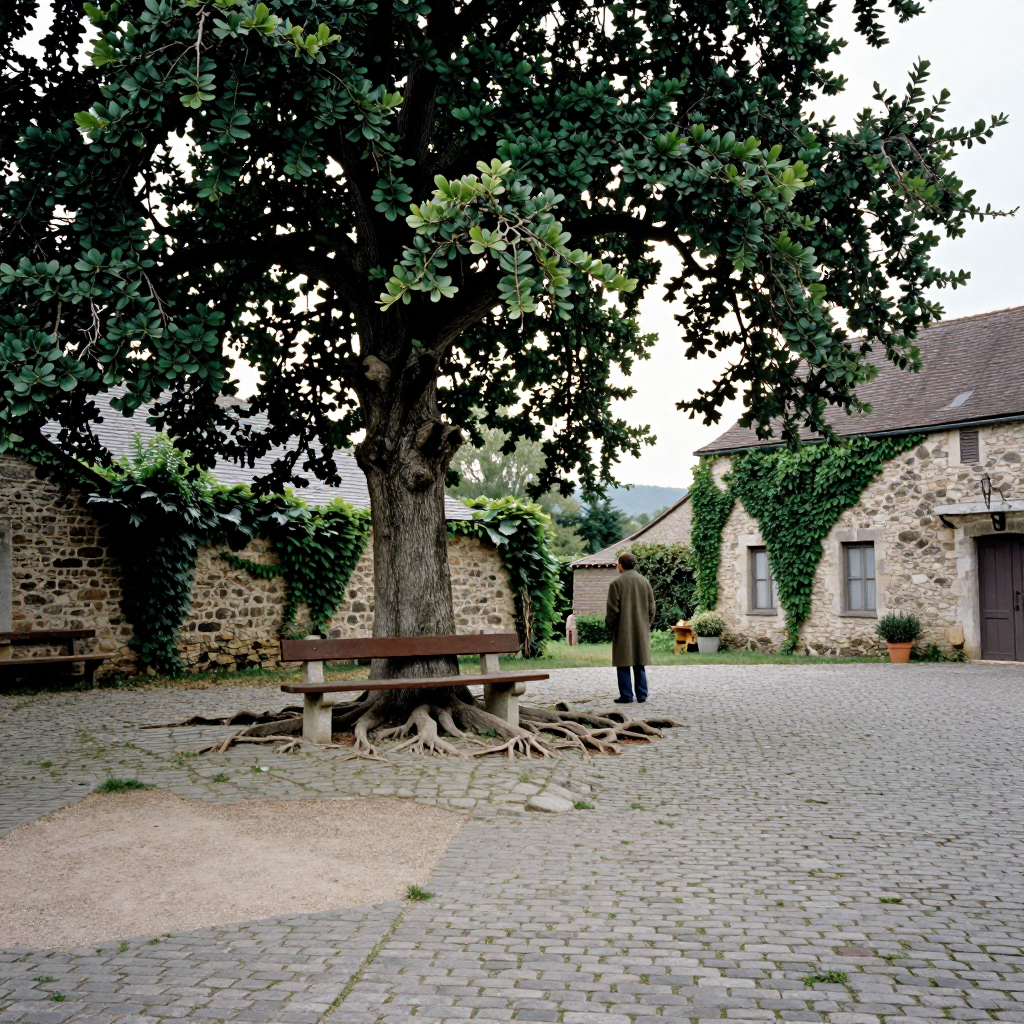
The novel is also a meditation on disappearance, both literal and metaphorical. Photographs of the abandoned castle, the surrounding forest, and a central bench punctuate the narrative, adding to its sense of melancholy and mystery. The story lingers in the space between dream and reality, where solitude can be both a burden and a form of protection. Jacques, guided by an enigmatic narrative voice, moves through a world that is at once strange and familiar, touching on the quiet violence of isolation and the power of imagination to create shelter. Le Château de la Solitude is a novel that lingers in the mind, offering a rare and delicate exploration of childhood, memory, and the spaces between.
A Child's Journey Through Solitude and Mystery in Le Château de la Solitude
AI-rewritten from original reportingHow it works

luc-dagognetchildhoodmelancholyfantasyliterature