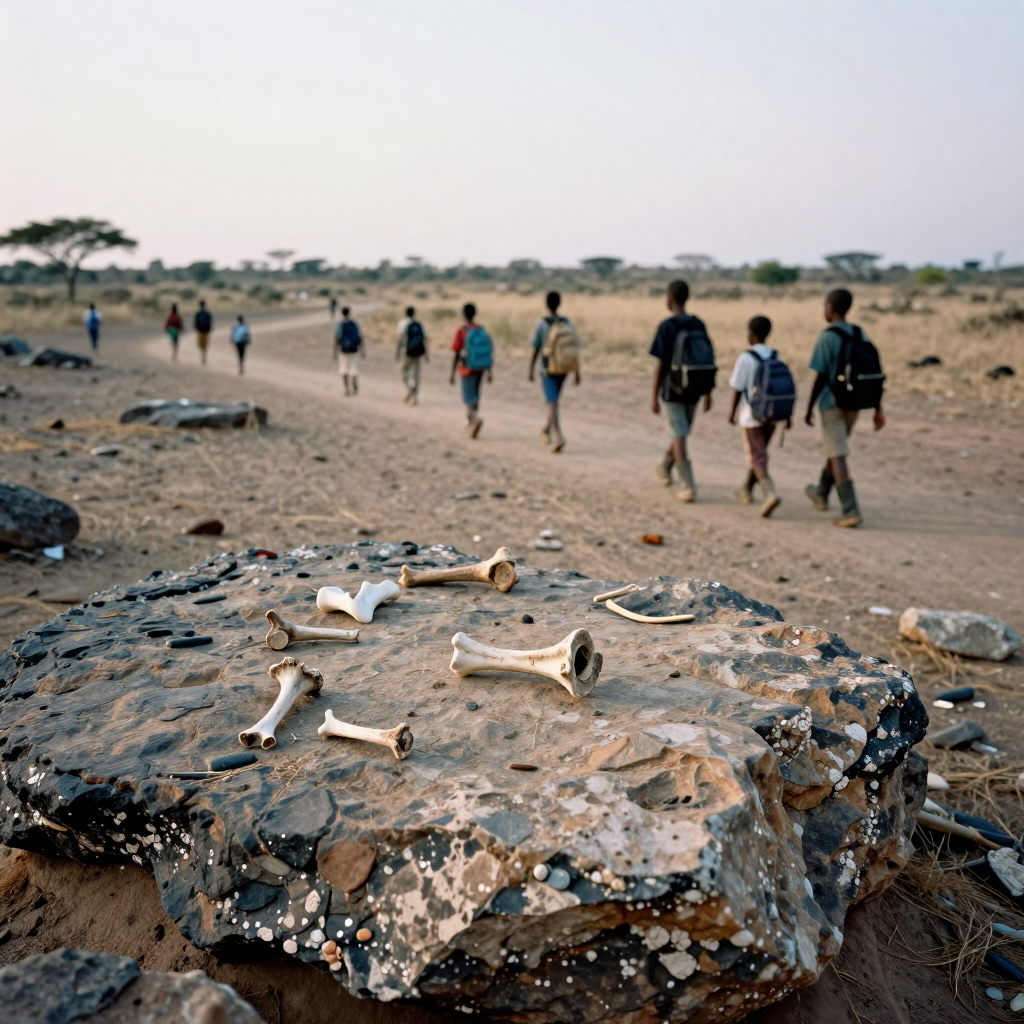
Paranthropus robustus walked upright like humans, revealing new clues about early human evolution and survival strategies.
Fossils reveal upright walking in Paranthropus robustus
Researchers have confirmed that Paranthropus robustus, an extinct hominid species known from fossils in South Africa, walked upright like modern humans. This finding, based on hip, thigh, and tibia bones from a young adult, challenges previous assumptions about the species' locomotion and its place in human evolution.Fossils show a small, bipedal hominid
The fossils belong to a young adult Paranthropus robustus, likely a female, who was about one meter tall and weighed 27 kg. This smaller size compared to other early human species does not suggest a lack of survival skills, as the analysis shows the individual walked on two legs, similar to humans.Bipedalism's role in evolution
The discovery provides new insights into how bipedalism evolved and how it became a key feature of human ancestors. Being able to walk upright likely helped Paranthropus robustus move more efficiently in varied environments and forage for food, despite its small size.Evidence of predation on fossils
Some fossils show tooth marks and chewing traces, indicating that some individuals were preyed upon by large cats and hyenas. This vulnerability suggests that while bipedalism offered advantages, it did not fully protect the species from predators.Tool use and survival
Researchers have found evidence of stone and bone tools associated with Paranthropus robustus, suggesting the species may have used them for hunting or gathering food. This raises questions about whether P. robustus independently developed these skills or learned them from contemporaries like Homo ergaster.Ongoing research on tool use
New studies, including computed tomography scans of bone structures, aim to clarify how Paranthropus robustus used tools in daily life. These findings could help determine the species' role in the broader context of human evolution and technological development.