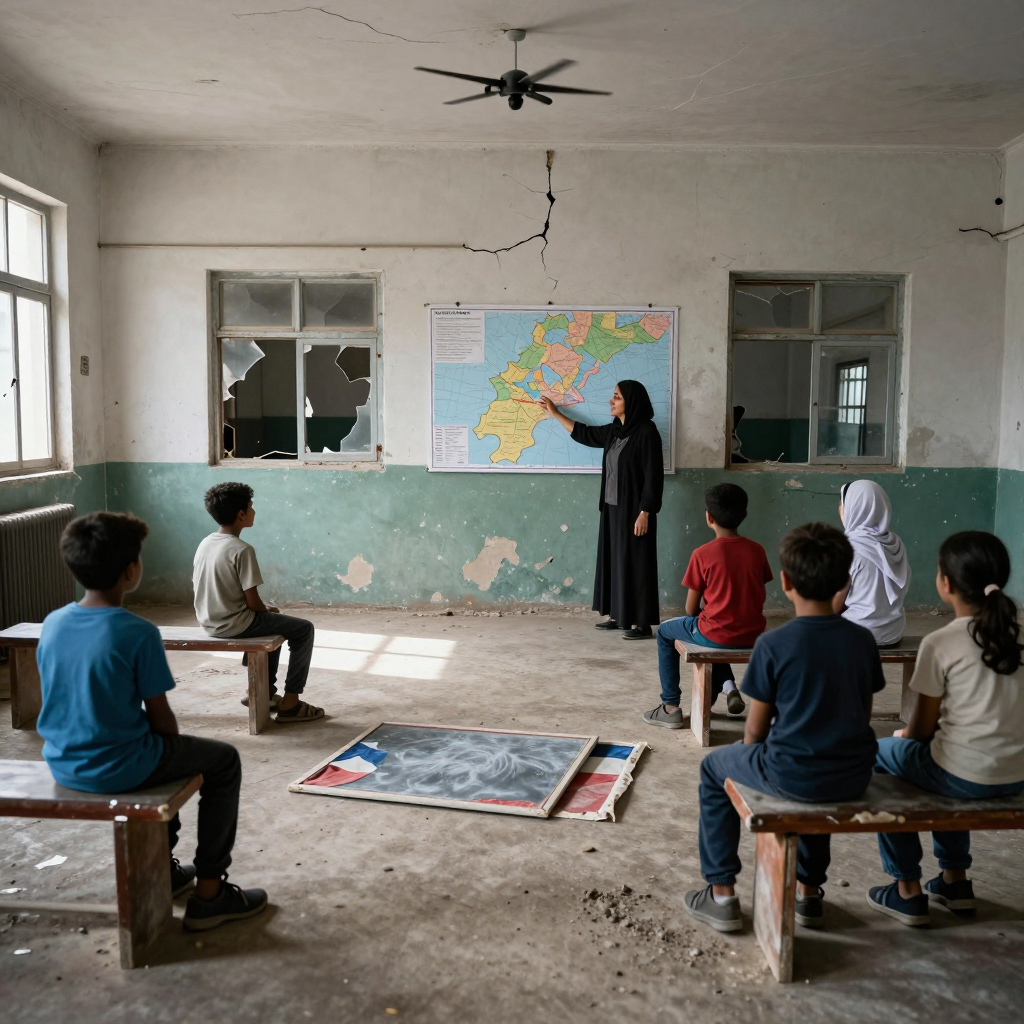
Lebanon’s public education system, once a point of national pride, has been severely strained by a series of crises and conflicts that have unfolded over the past several years. These challenges have included economic collapse, political instability, and regional conflicts such as the Syrian civil war and the Israel-Hamas conflict, all of which have had indirect but significant impacts on the country’s schools and students.
The economic crisis, marked by hyperinflation and a severe shortage of foreign currency, has made it difficult for the government to fund schools adequately. Basic resources such as textbooks, school supplies, and even electricity have become scarce in many areas. Teachers often go months without being paid, leading to high rates of absenteeism and a decline in the quality of education.
In addition to economic issues, the ongoing conflicts in neighboring countries have forced many Lebanese families to flee their homes, leading to a rise in internally displaced children. These children often face challenges in accessing education due to overcrowded schools, a lack of infrastructure, and the emotional and psychological toll of displacement. The situation has been further complicated by the lack of a coordinated response from the government and international aid organizations.
Despite these challenges, some schools and educators continue to strive to provide education under difficult circumstances. However, the cumulative effect of these crises has left the public education system in a fragile state, raising concerns about the long-term impact on Lebanon’s youth and the future of the country.
Lebanon's Public Education Sector Struggles Amid Ongoing Crises
AI-rewritten from original reportingHow it works

lebanoneducationcrisiswarinstability
Original sources:
- 🇫🇷RFI