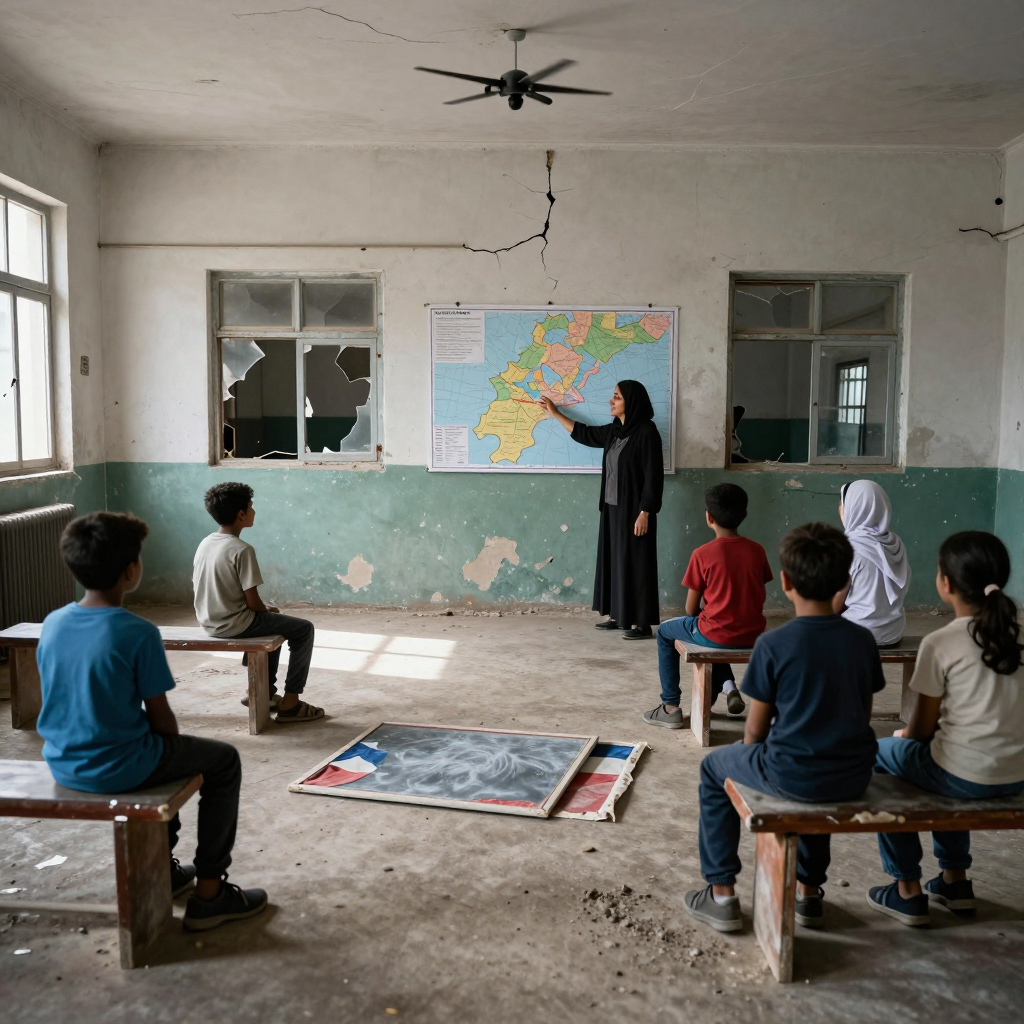
In southern Lebanon, where approximately 6% of the country's territory is currently under Israeli military control, over 100,000 schoolchildren face the risk of losing access to education, according to the United Nations. The ongoing conflict has severely impacted the region’s infrastructure, with more than 340 schools damaged and 17 completely destroyed. These figures highlight the growing challenges faced by students and educators in the area.
The destruction of schools has compounded existing difficulties in accessing education. Even before the current conflict, the Lebanese economy had been in crisis, leading to widespread poverty and limited resources for public services, including education. Additionally, the disruptions caused by the Covid-19 pandemic had already weakened the educational system, with many students unable to attend school regularly due to lockdowns and a lack of resources for remote learning.
With the war continuing, many families in southern Lebanon have been forced to flee their homes, further disrupting schooling for children who are now living in temporary shelters or with relatives in other parts of the country. The lack of safe access to schools, combined with the destruction of educational facilities, has made it increasingly difficult for students to continue their education.
The United Nations and local organizations are working to provide support, including temporary learning spaces and educational supplies. However, the scale of the challenge remains immense, as the ongoing conflict continues to affect not only the physical infrastructure of schools but also the stability of communities and the well-being of students.
Israeli Occupation and Conflict Impact Education in Southern Lebanon
AI-rewritten from original reportingHow it works

lebanonisraeleducationwaruncrisis
Original sources:
- 🇫🇷RFI